
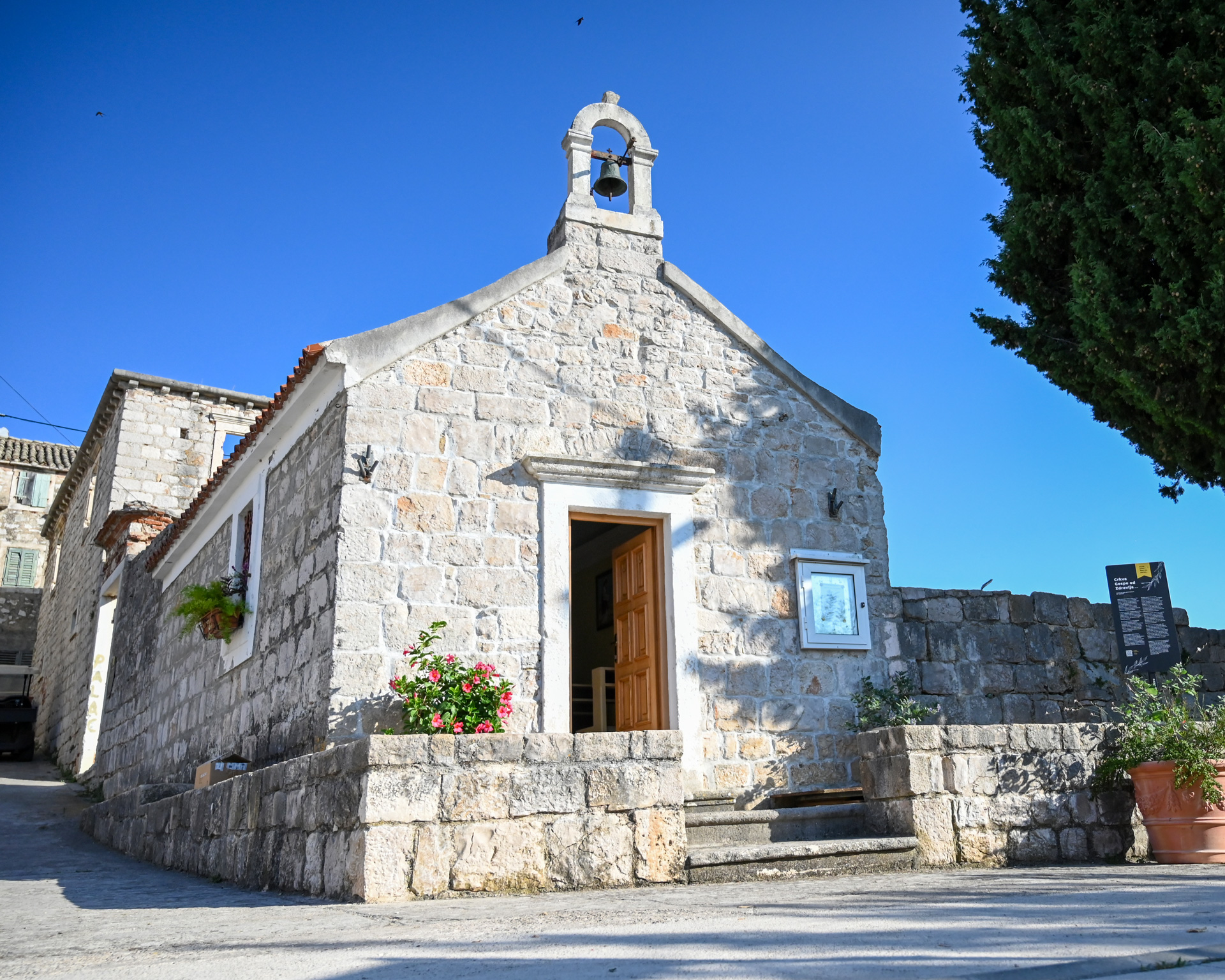
Chapel of Our Lady of Health
The icon of Our Lady of Health
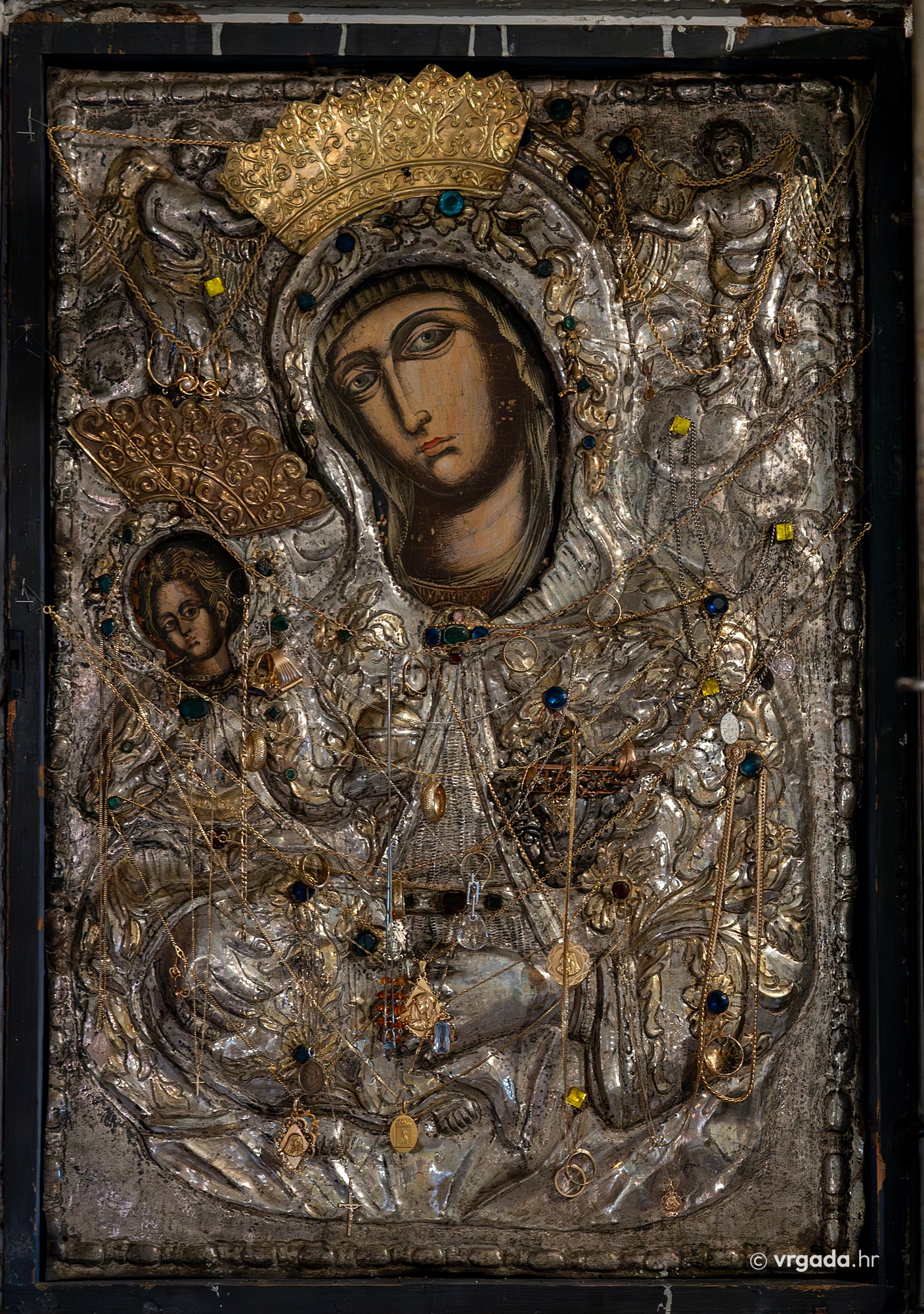
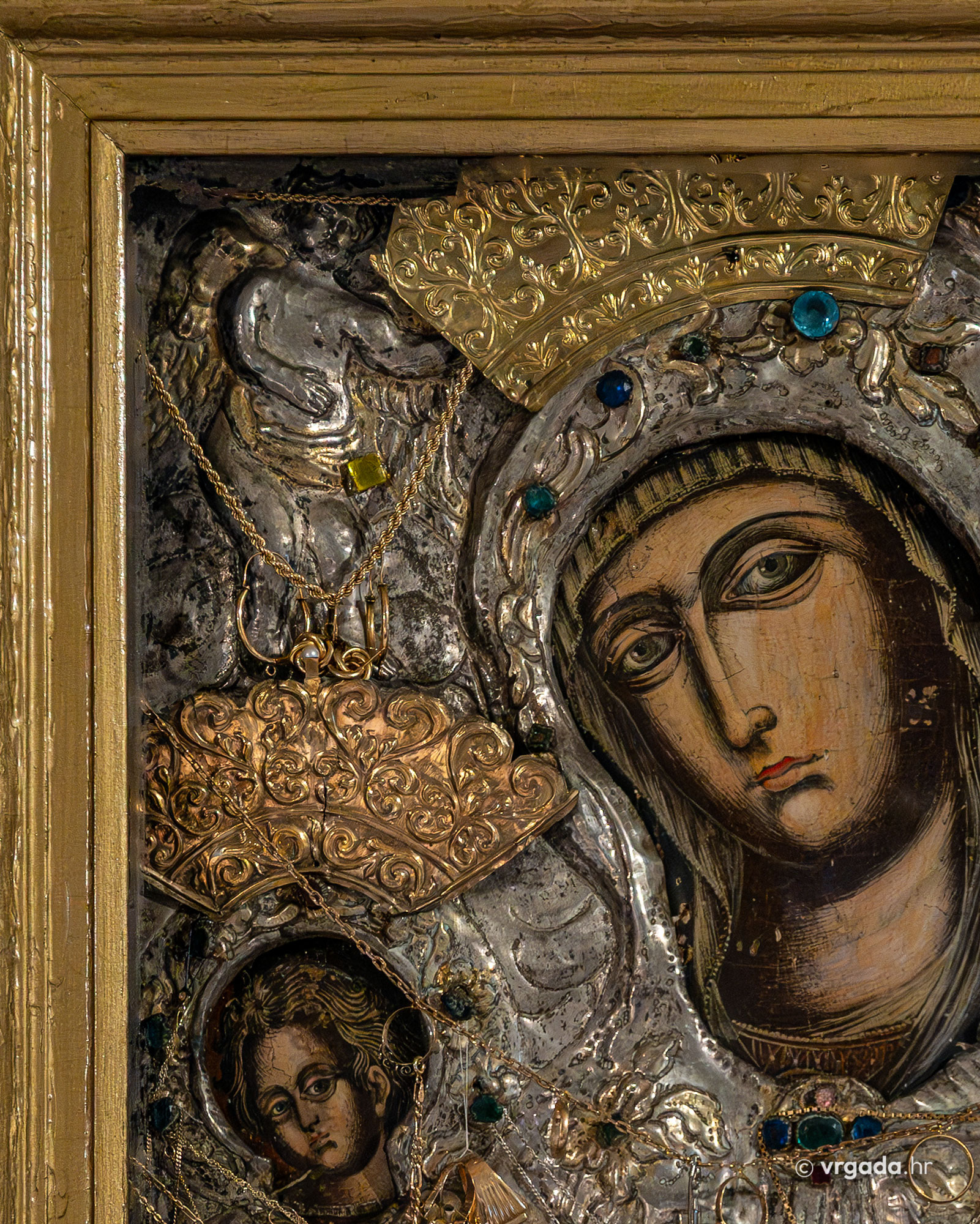
The icon of Our Lady of Health depicts the Virgin and Child in a frontal composition, typologically close to the Hodegetria tradition. The faces display archaic features, such as an elongated nose and almond-shaped eyes, which may indicate an older prototype (16th–17th century) that was later fitted with a new silver revetment. This revetment, richly decorated with floral motifs and angels, bears numerous votive offerings (ex voto), testifying to the long-standing local cult associated with the image. Since this is a particularly valuable work of art from Cretan workshops, from which many icons were imported to this region, the painting would benefit from thorough research and conservation work to better understand its origin and history.
Altar of Our Lady of Health
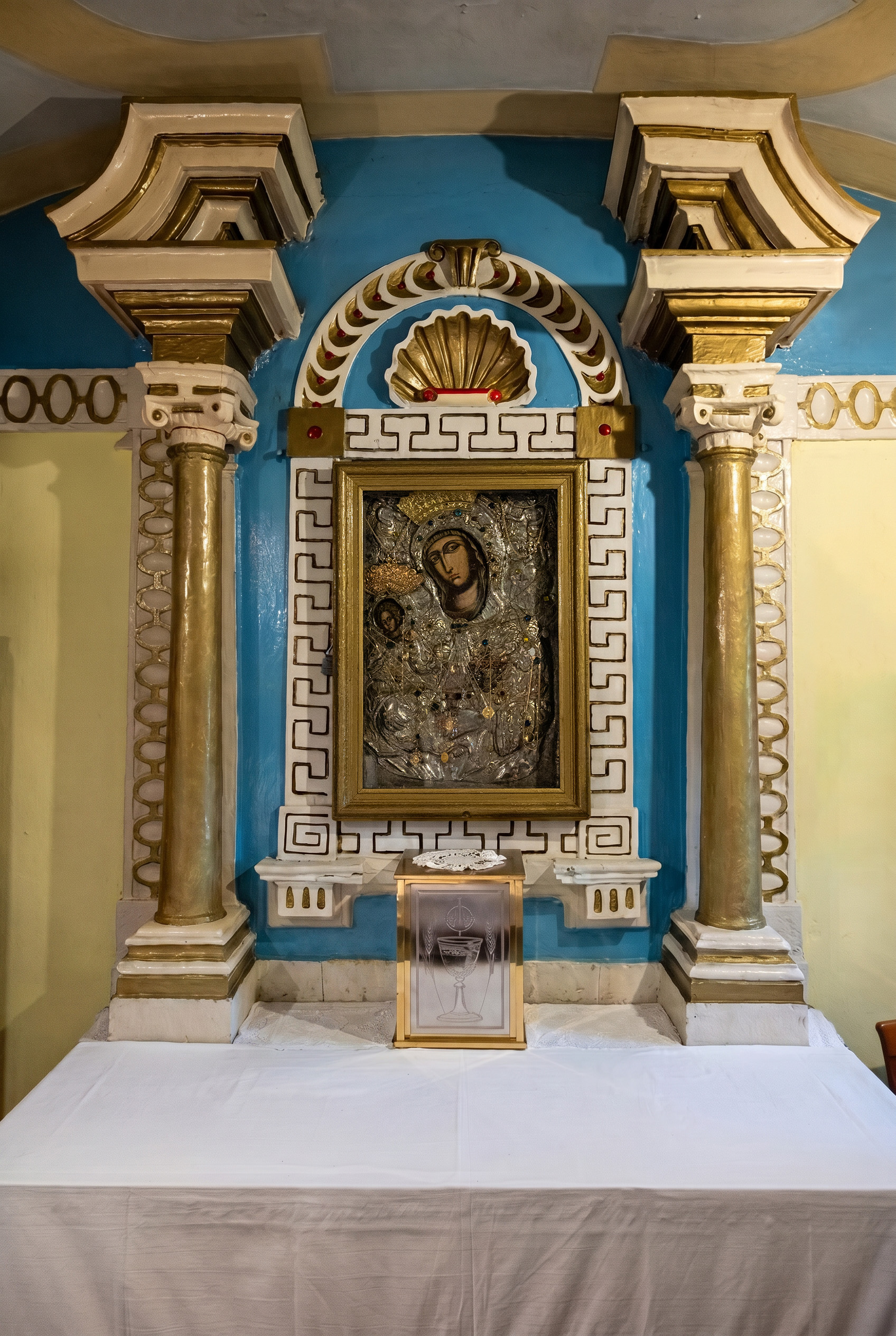
The small wooden altar is architecturally designed with a pair of columns and a broken entablature, serving as the altar for the venerated image of Our Lady of Health. The decoration surrounding the image – featuring a shell motif and a meander pattern – evokes Renaissance models, although the altar itself was created later, most likely during the Baroque period. It has been repainted several times in a white-and-gold colour scheme, making the original painted decoration no longer distinguishable.